California Fire Ants: ID, Behavior & Control Guide
By the Clark Pest Entomology Team | Last Updated: December 2, 2025
Key Takeaways
California Fire Ants (also called Southern Fire Ants) are native stinging ants found throughout the state. While aggressive when disturbed, they are generally less dangerous than the invasive Red Imported Fire Ant. They build irregular crater nests in soil, woodwork, and even electrical boxes. Professional control is recommended due to their painful sting.
Quick answer: If you've been stung by an ant in your California yard, it was likely the native Solenopsis xyloni. These amber-headed ants defend their nests fiercely. While they look similar to the notorious Red Imported Fire Ant, our native species is slightly less aggressive and builds smaller, flatter mounds.
Is it a California Fire Ant or an Imported Fire Ant?
California is home to both the native "Southern" Fire Ant and the invasive "Red Imported" Fire Ant (RIFA). Telling them apart is difficult without a microscope, but their behavior gives clues.
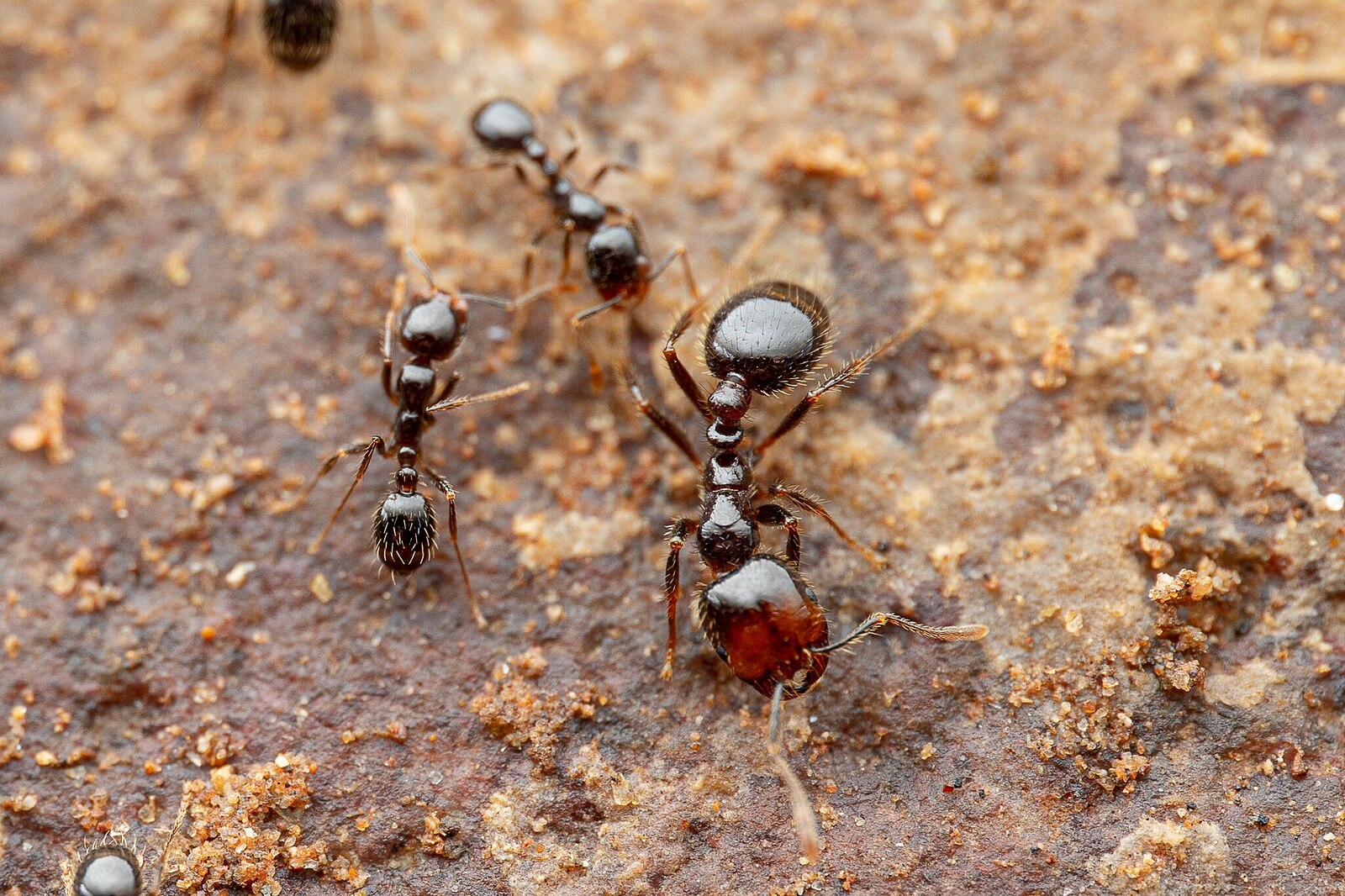
California (Southern) Fire Ant: Bicolored with a reddish-yellow head/thorax and a very dark/black abdomen.
Photo: Jake N. via Wikimedia Commons, CC BY 4.0
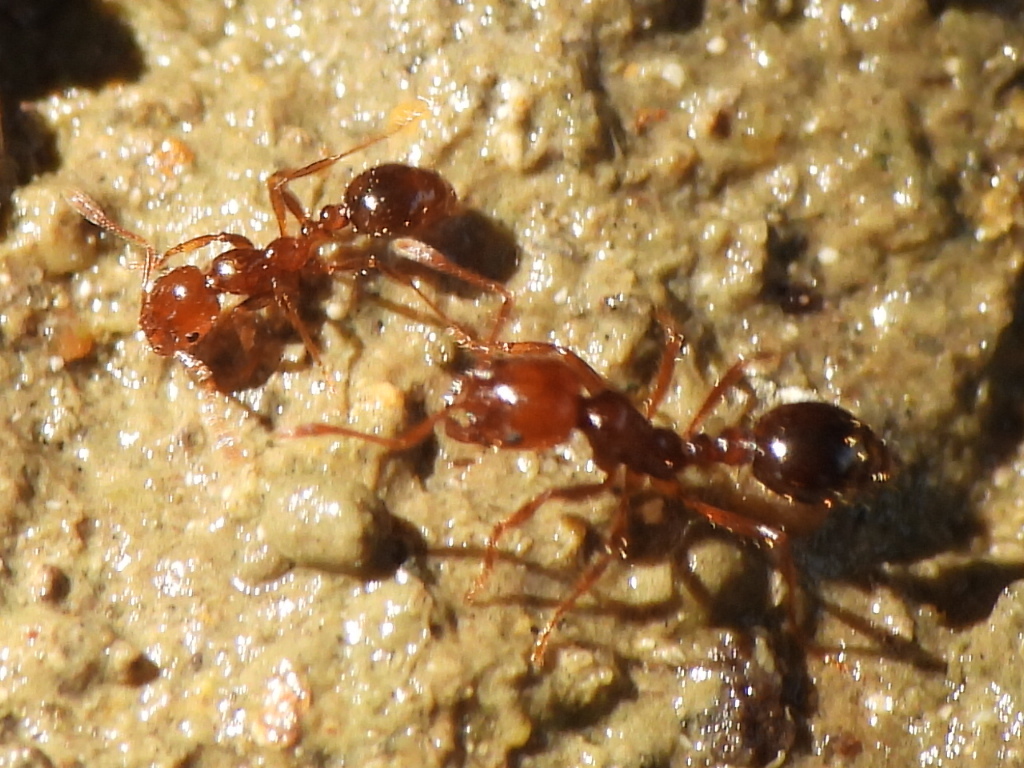
Red Imported Fire Ant (RIFA): Often a more uniform reddish-brown. Builds larger, dome-shaped mounds.
Photo: Sam Kieschnick via Wikimedia Commons, CC BY 4.0
The "Sting" Test (Not Recommended): Both species sting, but the Red Imported Fire Ant is known for swarming en masse and stinging simultaneously. The native California Fire Ant is aggressive but usually less coordinated in its attack.
Behavior & Nests: Where Do They Hide?
Unlike other ants that just want your crumbs, California Fire Ants are scavengers attracted to high-protein sources. This makes them unique—and dangerous to electronics.
- Nests: They build loose, crater-like mounds in soil, often near the base of trees or shrubs.
- Electricity: Strangely, these ants are attracted to electrical fields. We often find them swarming inside HVAC units, breaker boxes, and water meter housings, where they can strip wire insulation and cause short circuits.
- Diet: They will eat almost anything, including seeds, insects, sweets, and meats.
Watch: Inside the World of Fire Ants
Why are these ants so successful at taking over yards? Check out this fascinating deep dive from PBS Digital Studios.
Video: PBS / It's Okay to Be Smart
How to Keep Fire Ants Away (7 Steps)
Because these ants nest outdoors but forage indoors, you need a "defense in depth" strategy.
- Seal Entry Points: Use silicone caulk to seal gaps around cables, pipes, and wires entering your home—remember, they follow electrical lines!
- Manage Moisture: Fix leaky hose bibs and irrigation lines. Fire ants often nest near water sources in our dry climate.
- Clear Vegetation: Trim shrubs and tree branches so they don't touch your house. This cuts off their "bridge" to your roof and windows.
- Clean Up Food: They are protein-feeders. Do not leave pet food outside overnight.
- Inspect Breaker Boxes: Periodically check your outdoor electrical boxes for soil accumulation—a sign of nesting.
- Treat Mounds Directly: If you see a mound, drenching it with boiling water is a popular DIY fix, though often only temporary.
- Professional Baits: Because they can detect and avoid many sprays, professional granular baits are often the only way to kill the queen deep underground.
Clark's Expert Insight
"The biggest mistake homeowners make with Fire Ants is spraying the mound with a repellent spray. This usually just causes the colony to 'bud' or split into two new colonies nearby. To truly eliminate them, you need a slow-acting bait that the workers will carry back down to the queen."
Frequently Asked Questions (FAQs)
Are California fire ants dangerous?
▶
Yes, they can be. While their venom is generally not lethal, their stings are painful and can cause allergic reactions in sensitive individuals. They are known to be aggressive toward pets and children playing in the yard.
Do fire ants bite or sting?
▶
Technically, both. They bite with their jaws to get a grip, and then sting with their abdomen to inject venom. This is why the sting feels like a sharp burn—hence the name "Fire Ant."
Why are fire ants in my electrical box?
▶
Fire ants are attracted to electrical fields and the warmth generated by equipment. They often nest in air conditioning units, well pumps, and breaker boxes, where they can strip insulation from wires and cause costly short circuits.
Serving California and Northern Nevada
Our entomology team understands the unique pest pressures of our local region. From the humid valleys to the dry high deserts, we know where these ants hide.
Don't Let Fire Ants Take Over
If you see mounds in your yard or ants near your electrical equipment, Clark Pest Control can apply targeted baits to eliminate the colony safely.
Get a Free Fire Ant Inspection