


Key Takeaways
Agricultural Termites (also known as Desert Termites) are outdoor pests that feed on grasses and weeds, not buildings. They are common in Texas and the arid Southwest (including California and Nevada). Unlike destructive Subterranean Termites, they do not damage homes and rarely require treatment. If you see termites swarming in your lawn but not your house, they are likely these harmless recyclers.
Quick answer: Seeing a swarm of termites in your yard can be terrifying, but not every termite wants to eat your house. Agricultural or "Desert" termites are surface-dwellers that eat live grasses, weeds, and forbs. They are a nuisance to lawns but pose zero threat to wooden structures.
Ag Termites vs. Subterranean Termites: Comparison
It is crucial to distinguish between the harmless "grass eaters" and the destructive "wood eaters." In California and Nevada, the wood-eating Subterranean Termite is the one you need to watch out for.
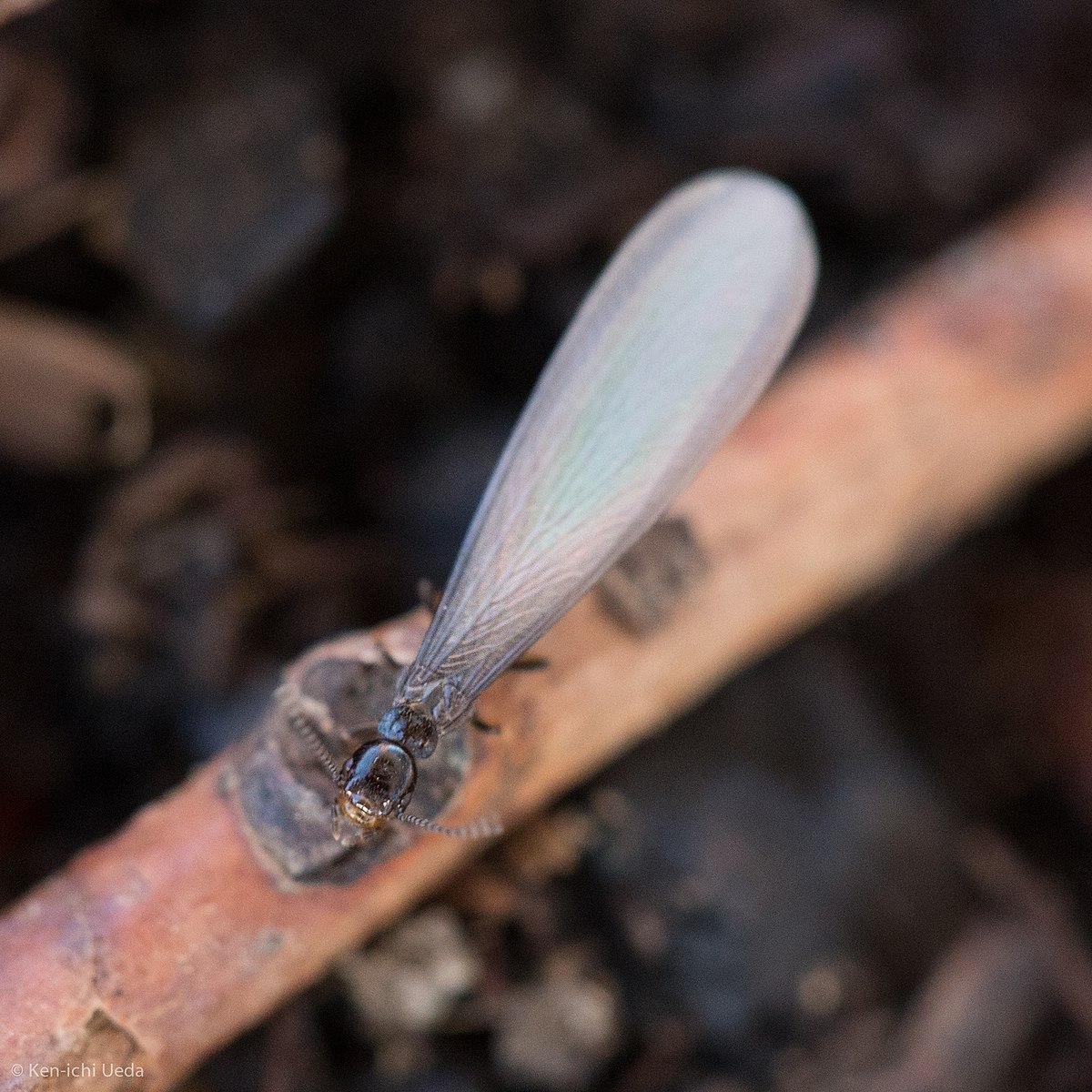
The Threat: Subterranean Termite
Black/Dark Brown body. Swarms near foundations/indoors. Eats wood.
Photo: Ken-ichi Ueda via Wikimedia Commons, CC BY 4.0
The Nuisance: Agricultural Termite
- Color: Often reddish-brown or lighter tan.
- Wings: Tan or semi-transparent, often 2x body length.
- Location: Found in open fields, pastures, or lawns.
- Diet: Live grasses, weeds, hay, and forbs.
- Danger Level: Low. They may thin out a lawn but will not eat your home.
The Simple Test: If you see "mud tubes" climbing your foundation or swarms inside your home, call a professional immediately. If you see termites marching across your driveway or swarming over a hay field, they are likely Agricultural termites.
Why Are They Swarming Now?
Both types of termites swarm for the same reason: reproduction. When a colony gets large enough, it produces winged kings and queens (alates) that fly out to start new colonies.
Agricultural termites are notorious for massive swarms after summer rains or during humid weather in the Southwest. Because they live near the surface (or build tubes over grass), their swarms are highly visible to hikers, farmers, and homeowners with large yards.
Watch: Understanding the Real Threat
While Agricultural termites are harmless, Subterranean termites are not. Watch this guide from the University of California (UC IPM) to learn how to spot the dangerous variety.
Video: UC IPM (University of California)
Do I Need to Treat My Lawn?
Generally, no. Agricultural/Desert termites are actually beneficial for the ecosystem. They aerate the soil and break down tough plant cellulose, returning nutrients to the earth. In drought conditions, they may feed more heavily on turfgrass, causing some brown spots, but chemical treatment is rarely recommended for urban lawns.
However, you must be sure. Because Subterranean termites also live in the soil, confusing the two can be a costly mistake.
If you find termites near your foundation, do not guess. Schedule a professional inspection to confirm the species.
Clark's Expert Insight
"In our service areas across California and Nevada, we often see Desert Termites (Gnothamitermes) encasing dried grass stems in mud tubes. It looks strange, but it's just them protecting themselves from the sun while they eat. If those mud tubes start climbing your stucco or foundation, however, that's a Red Flag for Subterranean termites. Call us immediately."
Frequently Asked Questions (FAQs)
Serving California and Northern Nevada
From the Central Valley to the high desert, our termite inspectors know the difference between a lawn pest and a home threat.
Not Sure Which Termite It Is?
Don't gamble with your biggest investment. If you see swarming insects, Clark Pest Control can confirm the species and give you peace of mind.
Get a Free Termite Inspection